How to Get Around Piedmont, Italy: By Train, Bus, and Car
Car-free travel is possible, but not always practical.

Some of the links in this post are affiliate links. This means I may earn a small commission if you make a booking at no extra cost to you.
Piedmont is a large and varied region, and getting around it means adapting your travel plans to its diverse landscapes.
Many visitors choose to hire a car for their entire stay, preferring the freedom to explore at their own pace—and it’s worth comparing car hire options in advance, as prices and availability vary significantly by season.
But what about public transport? Can you get around without a car? This practical guide covers everything you need to know before you book.
Coming from abroad? Discover how to get to Piedmont from Europe and beyond.
 Victoria Peel-Yates
Getting Around Piedmont by Train
In Piedmont, trains can take you most of the way to your destination, but you’ll often need to arrange last-mile transport, especially if you’re heading into the remoter parts of the hills and mountains.
Here’s how to get to and around some of Piedmont’s most popular areas by train.
Turin
If you’re staying in Turin, you won’t need a car. The city has a metro, tram, and bus system run by GTT, as well as taxi services, and you can take a train from the city centre to the airport.
GTT tickets are available from authorised vendors like tobacconists—look out for the sign with the GTT logo on it—and at ticket machines inside metro stations. In the metro and on buses, you can also pay with your contactless card.
Alternatively, download the To Move app on your phone—the digital tickets are slightly cheaper than the physical paper ones.
Turin serves as the regional hub for train travel, and connects to most of Piedmont’s main towns. Read on for information about getting to some of the region’s most popular destinations by train.
How you get around Piedmont depends on how much time you have. Whether you have two days or two weeks, these itineraries adapt to fit any schedule.
 Victoria Peel-Yates
The Wine Regions
These are the most practical train bases for exploring Piedmont’s vineyards, although reaching individual wineries almost always requires a car, taxi, or guided tour.
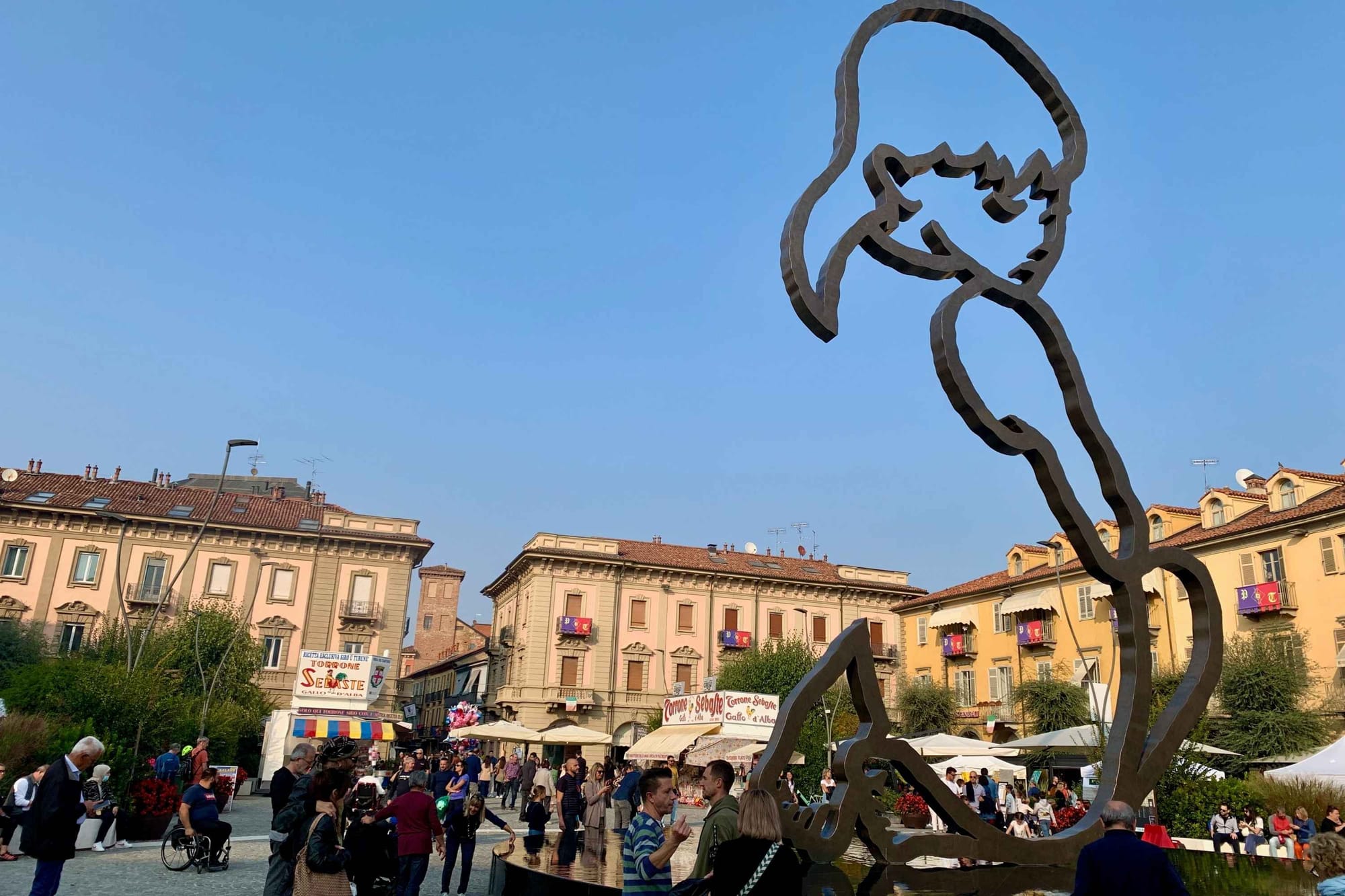
The Southern Hills: Langhe, Roero, Monferrato
These three towns are the main gateways to Piedmont’s southern wine hills and are all reachable by direct train from Turin:
- Turin → Alba: 1 hr 10 mins, €8. Trains depart hourly from Turin Lingotto.
- Turin → Asti: 35–45 mins, €7–10, with twice-hourly departures from Turin Lingotto.
- Turin → Alessandria: 1 hr, €10–25, with multiple departures daily from Turin Porta Nuova.
Northern High-Altitude Wine Regions
The region’s lesser-known high-altitude wine regions to the north are also accessible by train, although reaching them sometimes requires changing trains:
- Turin → Ivrea: 1 hr, €8, with twice-hourly departures during peak times. Some are direct, some change at Chivasso.
- Turin → Biella: Around 1 hr 10 mins, €9-14. While there are occasional direct trains, most routes change at Santhià or Novara.
The Lakes: Maggiore & Orta
They may look close on the map, but reaching Piedmont’s lakes from Turin by train requires time and patience.
To reach Stresa by train, you’ll need to change at Rho Fiera (Milan), and journeys can take between two and four hours.
The upside is that this is both a scenic and economical way to discover northern Piedmont—perfect if your goal is slow travel—and the journey costs around €14.
Once you arrive in Stresa, the station is located around 1.5 km from the lakefront and ferry terminal.
For Orta San Giulio, you’ll need to take the train to Orta-Miasino station from Turin, changing in Novara.
Departures are slightly more reliable than those to Stresa, and the whole trip takes roughly 2.5 hours and costs around €13.
From Miasino station, you can take the line 5 bus or a taxi down the hill to the main town.
The Alps
Many of Piedmont’s most popular spots for skiing and hiking in the mountains are surprisingly accessible by train from Turin.
Western Alps (Susa Valley & French border)
- Turin → Susa: 1 hr 10 mins, direct, €7. Hourly departures throughout the day.
- Turin → Bardonecchia: 1.5 hrs, €9-€25, direct.
- Turin → Oulx/Sestriere: 1-1.5 hrs, €8-€23. Most are direct, some change at Salbertrand.
Southern Alps & Maritime Alps
- Turin → Cuneo: 1-1.5 hrs, €9, direct.
- Turin → Limone Piemonte: 2-3 hrs, €11. Change at Fossano or Cuneo.
Northern Alps & Ossola Valley
- Turin → Domodossola: Most routes change at Rho Fiera (Milan). The journey takes around 3-4 hours, but can be much longer depending on transfer times. From Milan, it’s just 1.5 hrs. Prices from Turin range from €15-€22.
Can’t decide where to go first? This guide breaks down what to do in Piedmont for food and wine lovers, art and culture buffs, and outdoorsy types.
 Victoria Peel-Yates
Getting Around Piedmont by Bus
Ask any local or Piedmont travel expert about getting around Piedmont by bus, and the answer is usually: only if you have plenty of time and patience.
While there are local services connecting smaller towns and villages, information and timetables aren’t always easy to find online, and you’ll often need to buy tickets in advance from a local vendor such as a tobacconist—if you can find one open.
This can work if you’re travelling slowly and enjoying the journey as much as the destination. But for visiting wineries, hilltop towns, and even reaching some rural accommodation, buses simply won’t get you where you need to go.
If renting a car or hiring a driver isn’t an option, joining a guided wine tour is often the most practical alternative for areas like the Langhe.
For longer distances, Flixbus operates a limited number of routes between Turin and some of Piedmont’s larger towns.
A Car-Free Alternative: MaaS Piemonte
MaaS Piemonte is a new digital initiative designed to make it easier to get around Piedmont without a car by combining public transport with ride-sharing, reducing the environmental impact of tourism by encouraging the use of greener transport.
To join the scheme, download one of the MaaS Piemonte partner apps, WeTaxi and MooneyGo, which combine different transport modes into a single, personalised itinerary.
When you sign up, you’ll receive a €30 credit valid for 30 days, and after your first trip, you can receive an extra €10 bonus if you complete a short survey.
Getting Around Piedmont by Car
Renting a car (or driving overland from Europe) is the preferred way to get around Piedmont for most visitors, offering the greatest flexibility and freedom to follow your nose and explore the region’s hidden villages and wineries.
Piedmont is served by several major motorways that connect it to France, Switzerland, and the rest of Italy, as well as major towns and cities across the region.
Outside of the motorways, many roads are narrow, steep, and winding, and fog is common. In winter, snow and ice can affect accessibility to remote parts of the region, and snow tyres or chains are required.
If you plan to explore rural areas, it’s worth comparing car hire options before you arrive.
Some of the most relevant motorways for tourists are:
- A6: Connects Turin to Savona, providing access to the Langhe
- A33: Connects Asti to Cuneo, crossing the Langhe
- A5: Connects Turin to Val d’Aosta and the Frejus Tunnel
- A4 & A7: Connect the region to Milan
Ready to plan your trip? This Piedmont travel guide will help you get started.
 Victoria Peel-Yates