Fojòt or Fujot? The Piedmontese Bagna Cauda Pot Explained
This small terracotta pot plays a starring role in Piedmont's food culture.

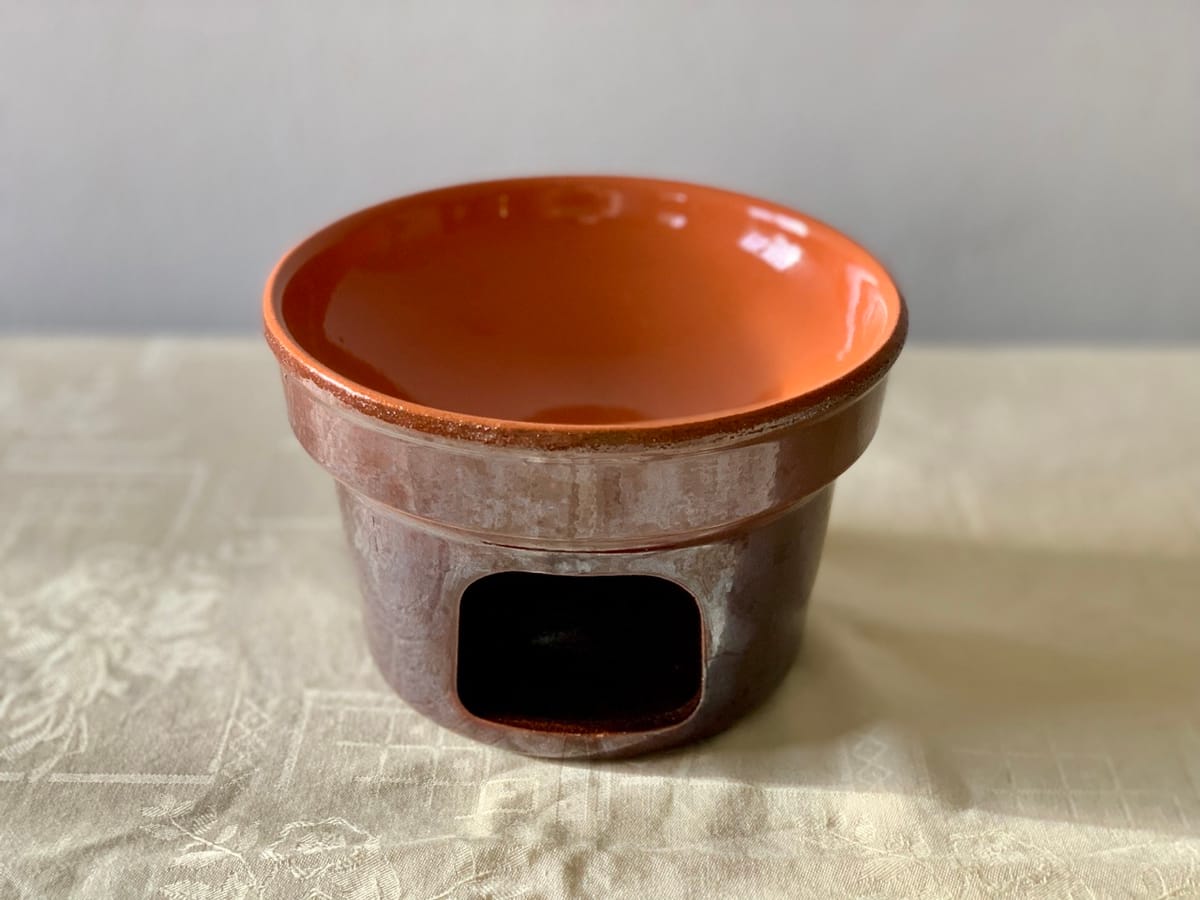
A fojòt is a small terracotta pot that looks like a cross between a fondue and an oil burner. It’s used for serving bagna caùda—a typical Piedmontese winter dish whose name means “hot dip”.
Two or three tealights placed underneath the pot keep the sauce warm—perfect for repeated dipping over a long, leisurely meal with a bottle of wine.
These days, bagna caùda is served in individual fojòt, but traditionally, it was presented in a communal pot in the middle of the table.
Want to make bagna caùda at home this winter? Check out these two family recipes.
 Victoria Peel-Yates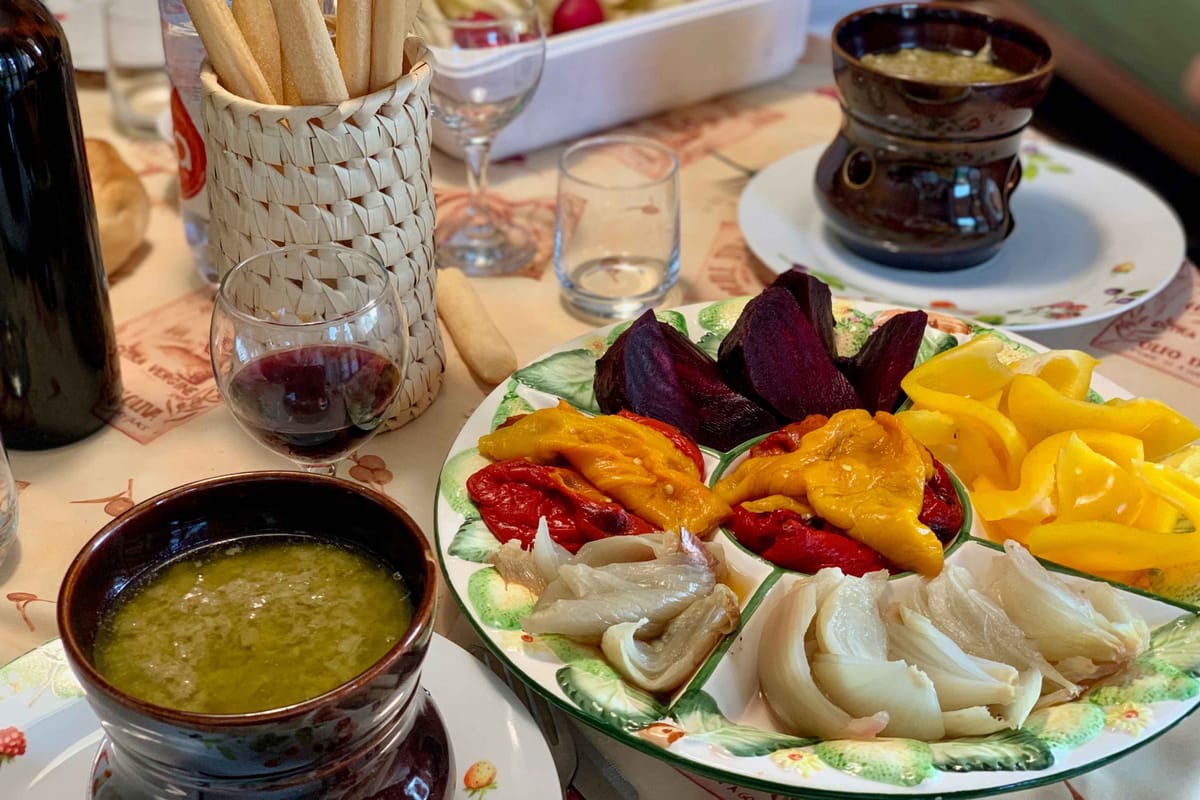
The Meaning and Origins of the Word “Fojòt”
Fojòt (also spelled fujot or fuyot) is a Piedmontese word that originally referred to the pan used to make not just bagna caùda, but other sauces like Piedmontese ragù.
My partner Max still remembers his grandmother asking “Chi sturcé er fojòt?”—meaning, who wants to scrape the remains of the sauce from the pan.
When purpose-made terracotta pots with space for a flame underneath became common for serving bagna caùda, the old word remained, shifting from the pan in the kitchen to the pot on the table.
Why Bagna Caùda Is Served in a Fojòt
Originally, bagna caùda was a humble dish. Made with olive oil and anchovies from Liguria—plus enough garlic to kill a vampire—it began as a way to make the most of a small number of readily available ingredients.
Families would gather round the table, dipping local vegetables into the sauce, which needed to be kept hot, so the fojòt provided a steady, gentle heat that kept the dip warm without boiling.
Today, bagna caùda occupies a very different place in Piedmontese food culture, often appearing in restaurants and homes as a celebratory, even high-end, winter dish.
It’s popular across Italy and beyond, particularly in northern Japan, where the cold, snowy climate lends itself to the same kind of warming comfort food. As a result, fojòt are surprisingly widely available to buy.
Where to Buy a Fojòt
A set of fojòt makes a great gift for yourself or the Italophile in your life. Many of these Piedmont-based retailers deliver across Italy, though you may need to contact them to request international shipping.
- Enologia Vi.Te—this Turin wine shop sells a selection of fojòt (spelled fujot or written as fornellini). Some are available online, while others can only be found in-store.
- Besio—this family-run ceramics studio in Mondovì sells hand-painted fujot in their online shop.
- Paniate—online shop selling fujot with physical shops throughout Piedmont: Alba, Asti, Acqui Terme, Albenga, Alessandria, Bra, Castagnito, and Novara.
- Peraga Garden Centre—order online from their website or from Amazon Italy or visit the garden centre in Mercenasco (Turin).
- Cucina Atelier—you can order online or visit their shop on Via Feroggio in Turin.
- Leroy Merlin Italia—sells fujot online, but only delivers within mainland Italy.
Visiting Piedmont this winter? Discover Turin in one day with this itinerary.
 Victoria Peel-Yates