Is Piedmont Really "the New Tuscany"?
The similarities stop at hills and vineyards.

For many travellers, Tuscany epitomises all that is quintessentially Italian: from Renaissance art in Florence and the panoramic charm of San Gimignano (twinned with my hometown of Sherborne), to beaches, olive groves, and sun-soaked vineyards.
But with its popularity growing, some are looking for new corners of the boot to explore—places that are a little more off the beaten track but just as rich in culture, food, and wine.
Enter Piedmont—or Piemonte to the locals.
Often touted as “the new Tuscany”, I think of this north-westerly corner as Italy’s answer to Switzerland. Like its northerly neighbour, Piedmont is famous for cheese, chocolate, and refined tastes—as well as Alpine scenery, French flair, truffles, and Barolo wine.
If you’re eyeing Piedmont as an alternative destination to Tuscany, this post will give you a breakdown of how they compare.
How many days do you need in Piedmont? Whether you have three days or two weeks, get 10 adaptable itineraries.
 Victoria Peel-Yates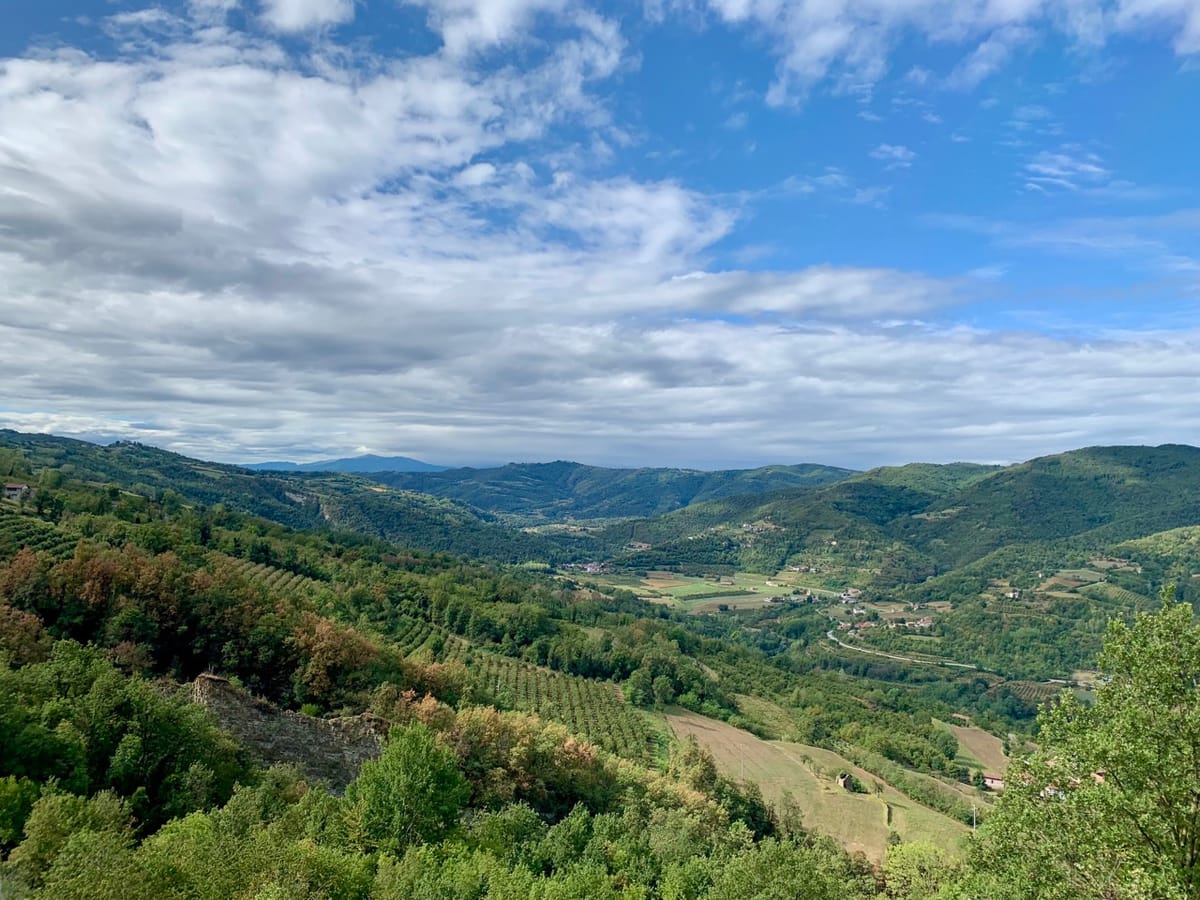
Cuisine: From Cucina Contadina to Fine Dining
Let’s start with the real reason you’re here—to talk about food.
Tuscany is famous for its simple, delicious cucina contadina—rustic fare rooted in humble traditions and based on high-quality ingredients like tomatoes, olive oil, pulses, pasta, and pecorino toscano cheese.
Piedmontese food is also rustic, but its Alpine pastures lend themselves more to cattle grazing than olive growing, producing a cuisine based on beef, butter, and cheese.
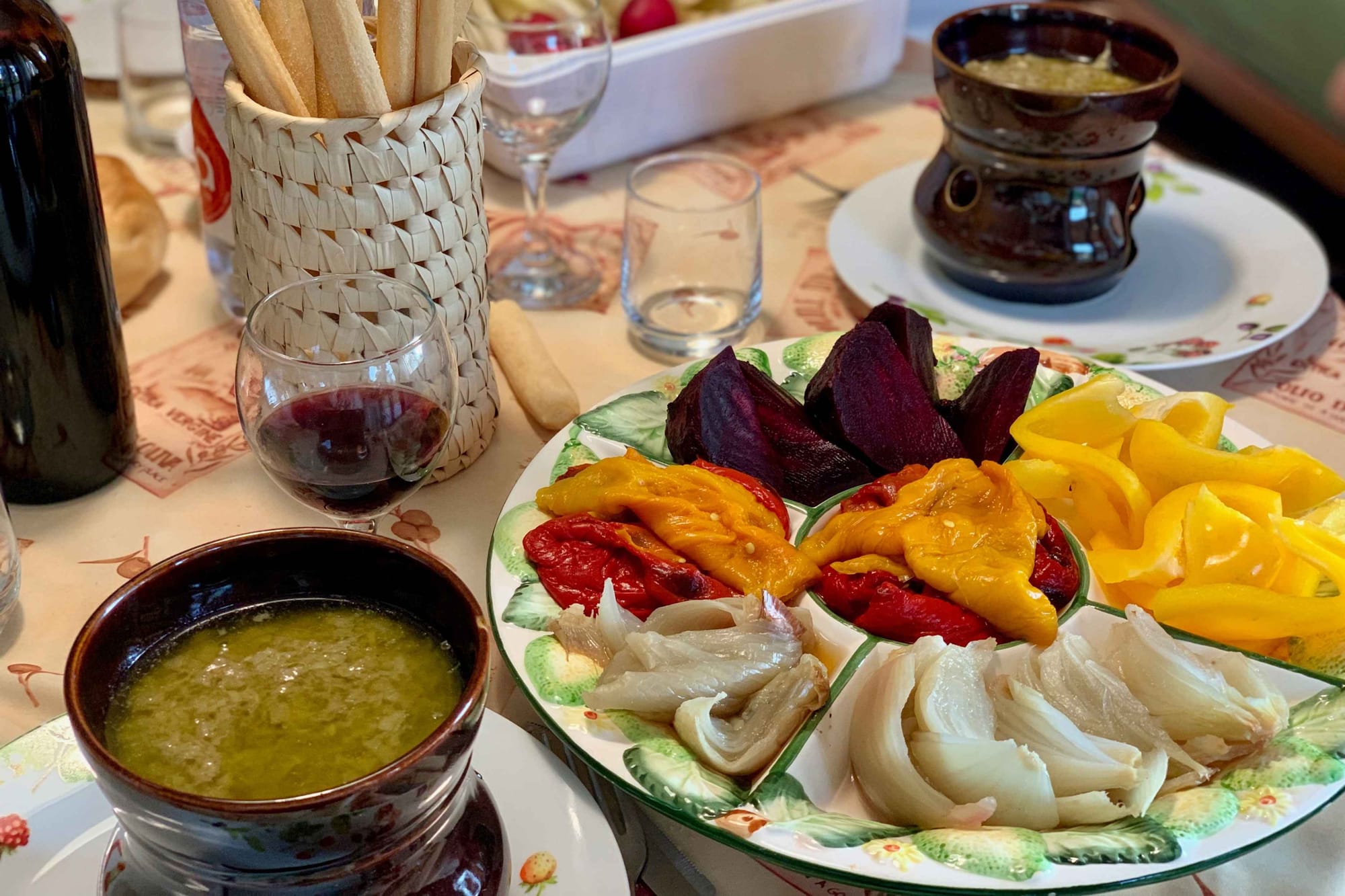
Butter replaces olive oil in many dishes, like tajarin burro e salvia—egg pasta ribbons with butter and sage—and fish found its way into Piedmont via the Salt Routes, leading to dishes like bagna cauda (a hot dip made with garlic and anchovies) and vitello tonnato (veal topped with a creamy tuna sauce).
If you thought bistecca fiorentina was impressive, wait until you try Piedmontese beef. While the frissona piemontese might not be quite as large as Tuscany’s Chianina “White Giants”, it’s still pretty hefty—you can see the beefiest specimens every December at the Fat Ox Fair in Carrù.
 Victoria Peel-Yates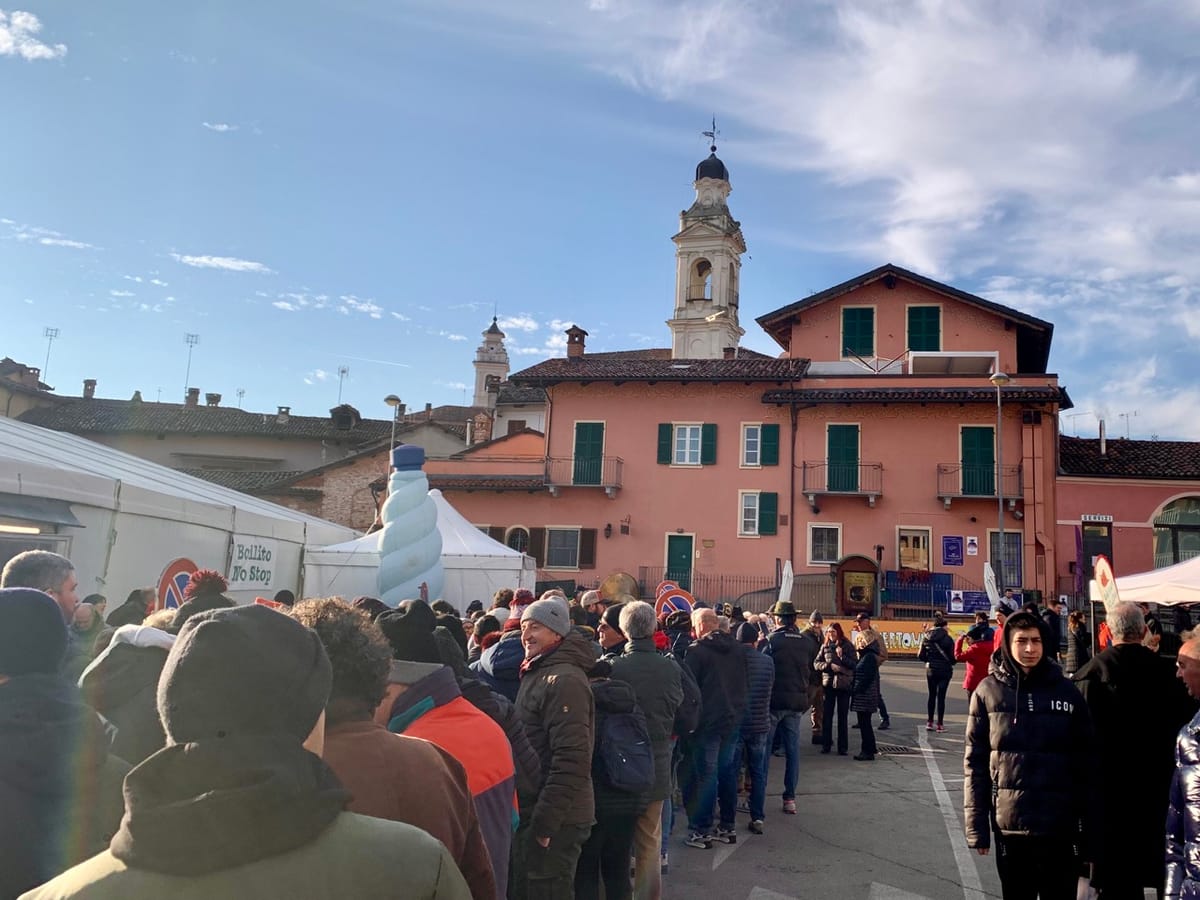
Of course, the cornerstone of Piedmont’s culinary identity is its mythical white truffle. The elusive tuber comes into season from October to December, when the Alba truffle fair takes place, and links Piedmont’s humble past with its prestigious present. Each autumn, top chefs and gourmet foodies flock to the region—which boasts over 30 Michelin-starred restaurants—to put their own spin on the classics.
But Piedmontese cuisine also has a refined side, shaped by its royal past and French influence. Turin—once the seat of the Savoy royal family—has an elegant chocolate-and-coffee culture that sets it apart from the rest of the region and is the birthplace of gianduja: silky hazelnut chocolates.
As a nod to its Occitane heritage, a Piedmontese meal often ends with a cheese course—all washed down with a glass of local wine.
Chianti or Barolo? How the Wines Compare
Between the two, Tuscany offers a broader variety of wines—from local grapes like Chianti and Brunello di Montalcino to international varietals like Cabernet Sauvignon, which are also blended with local grapes to produce “Super Tuscans”.
Piedmontese wines tend to be single-grape and focus on local varietals like Nebbiolo, which produces Barolo and Barbaresco—Italy’s most prestigious and age-worthy reds. This approach, along with the large number of small, family-run estates, has earned it the nickname the “Burgundy of Italy”.
Other notable Piedmontese reds include Barbera and Dolcetto—two approachable wines you’ll see on family dining tables across the region. Meanwhile, white wine lovers will enjoy local grapes like Arneis and Favorita, and Alta Langa produces sparkling wines that easily rival Franciacorta.
Like truffles and cheese, Piedmontese wines are a product of the region’s unique and varied geography.
Getting around Piedmont can be a challenge. This guide gives you the best options by car, train, and bus.
 Victoria Peel-Yates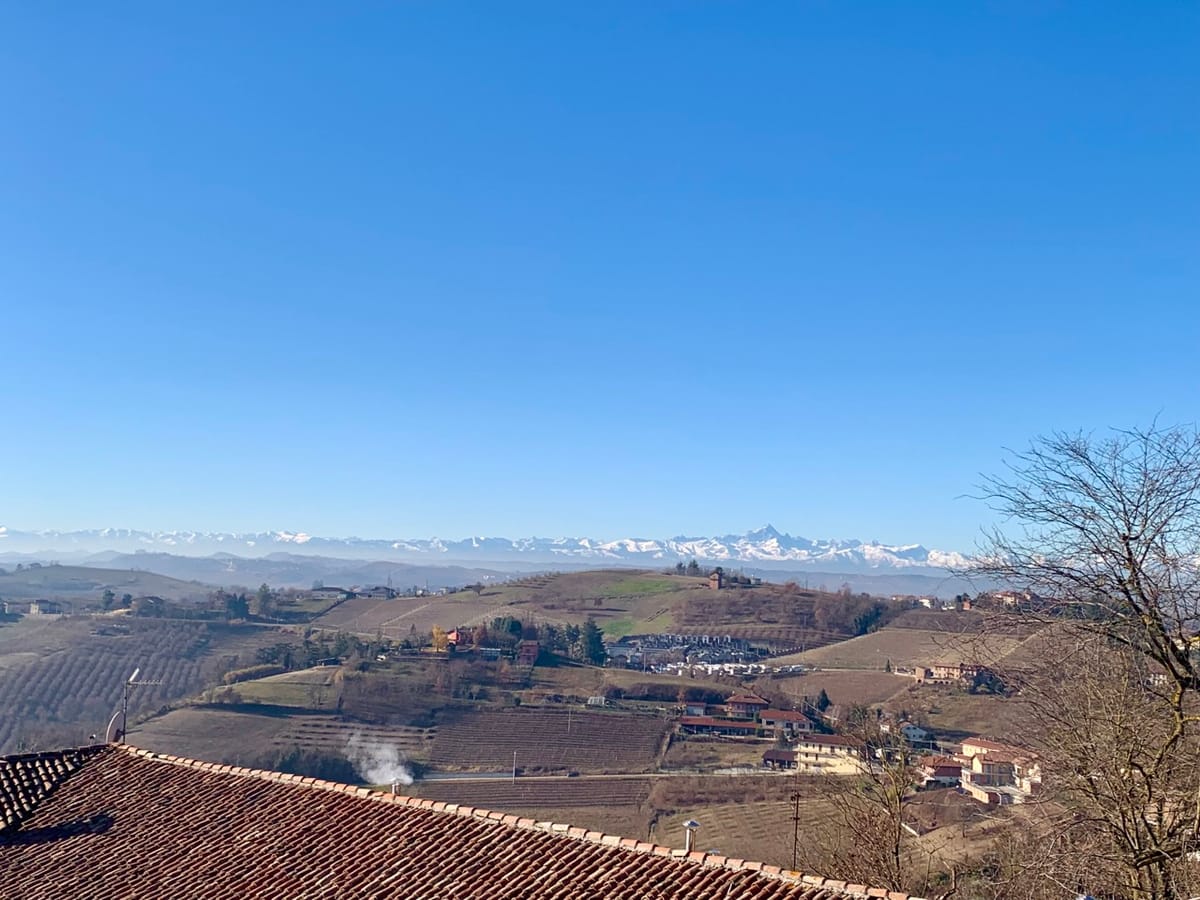
Landscape and Scenery: Vineyards, Hills, & Alps…Oh, My!
How do you like your hills?
Tuscany—with its gentle hills, golden light, and Mediterranean coastline—is endlessly photogenic. Piedmont is, too—but in a moodier, dramatic way—more Morticia Addams than Marilyn Monroe.
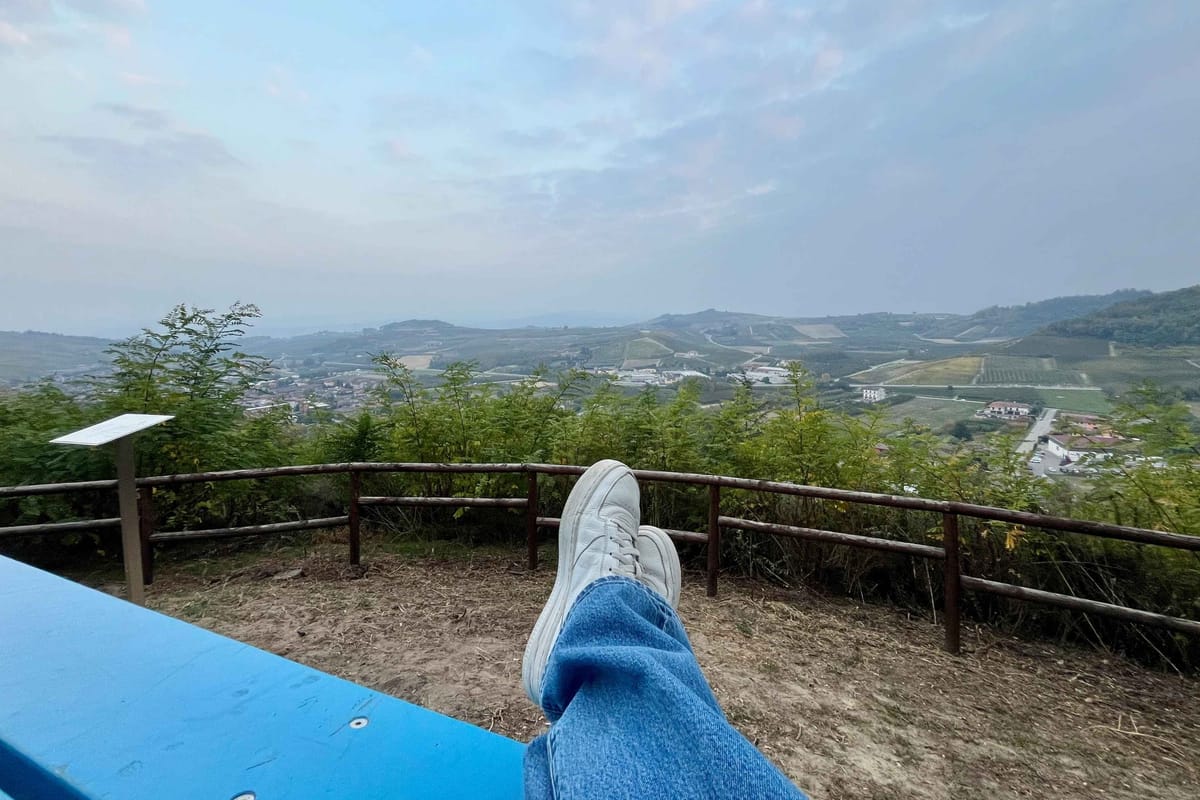
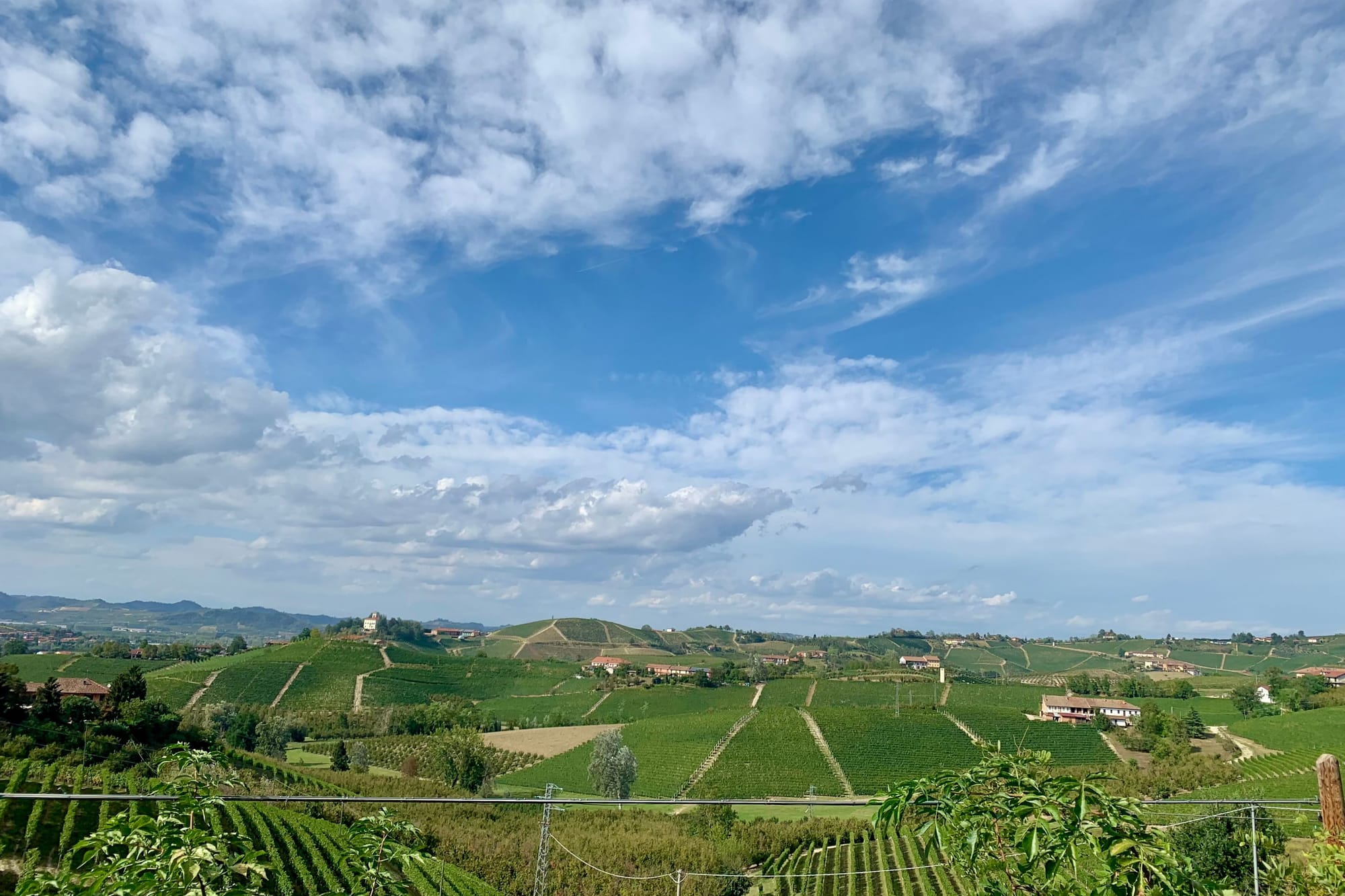
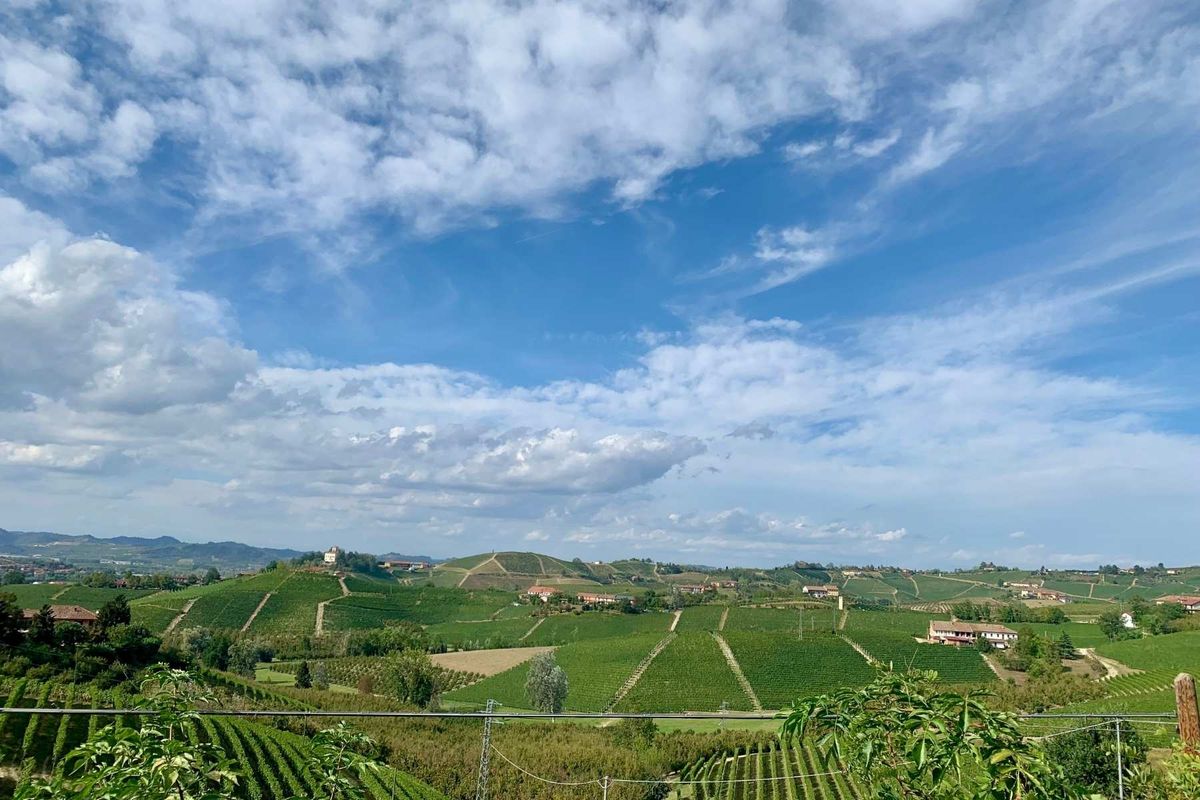
The southern part of Piedmont features gently rolling vineyards—the famous Langhe, Roero, Monferrato—but here, hazelnut groves and truffle forests take the place of olive trees.
These hills are famous for their mists and the dramatic Alpine backdrops that emerge on clear days. As you travel away from Alba, the hills become steeper and more forested, rising towards the Alpine borders to the west and south.
The mountains provide a year-round playground for nature lovers—from hiking through Valle Pesio or Gran Paradiso national park in spring to unwinding on the shores of Lakes Orta and Maggiore (think Como's beauty minus the crowds).
If you like Tuscany’s medieval villages, Piedmont’s got plenty, too: practically every hilltop is dotted with fortified towers and castles in this densely-populated region—and they’re home to underrated works of art.
Dreaming of wandering through those misty hills? Whether you’re flying into Turin, driving from Milan, or arriving by train, here’s how to get there.
 Victoria Peel-Yates
Art, Architecture, & Culture
Tuscany is synonymous with Italian art and culture—but Piedmont boasts both historical and contemporary artworks that are well worth a visit.
Art historians will appreciate the region’s rich medieval art, with frescoes waiting to be discovered in the tiniest rural churches and the grandest castles.
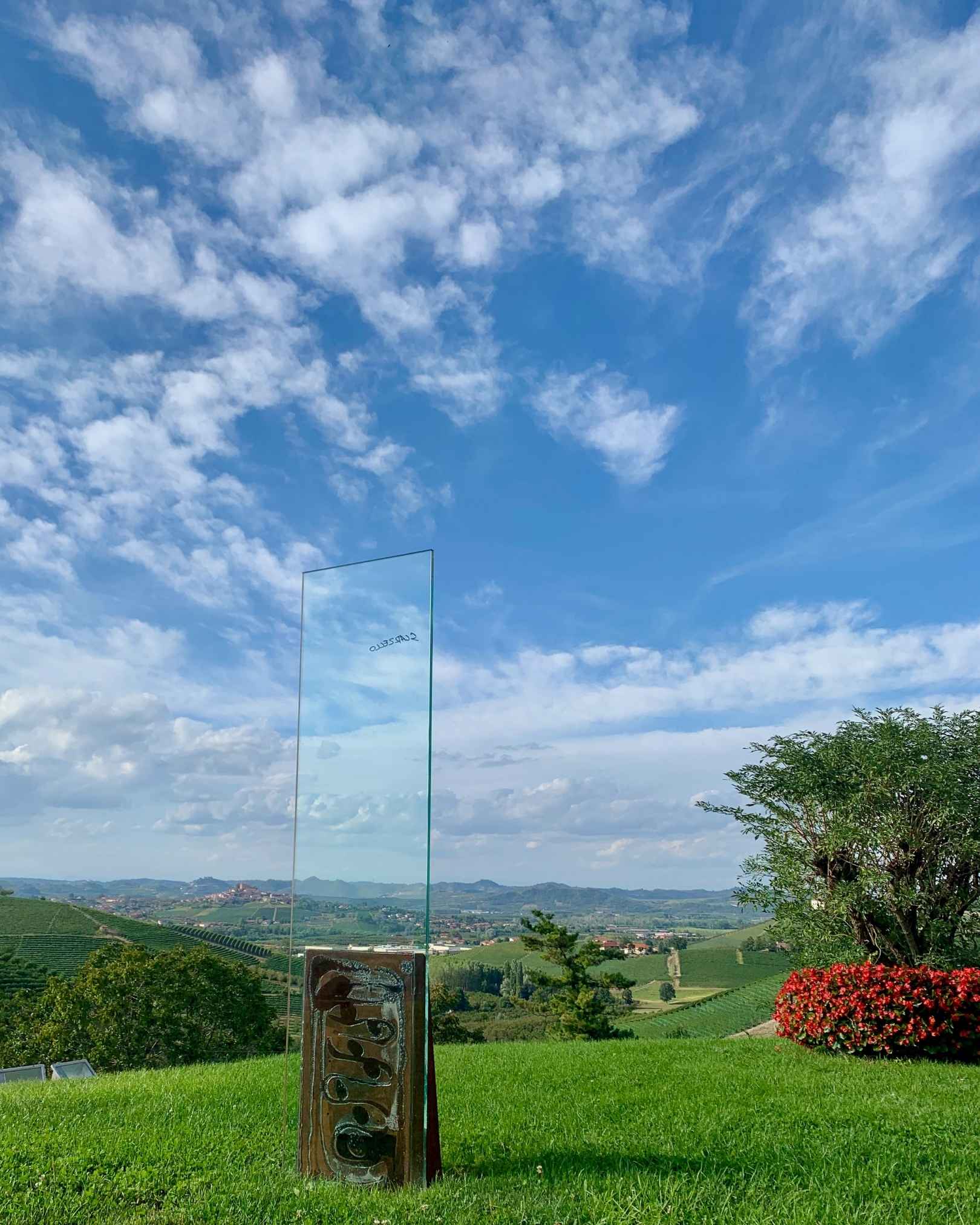
Meanwhile, contemporary art lovers will find a thriving scene, both in Turin and scattered throughout the region—like the iconic Barolo Chapel by Sol Lewitt and David Tremlett and sculptures at Grinzane Cavour Castle.
Turin is also home to the Egyptian Museum—with the largest collection of artefacts outside Cairo—the cinema museum (housed inside the iconic Mole Antonelliana), and the automobile museum.
Weather: From Sun-Soaked Beaches to Snow-Capped Peaks
Tuscany has a classic Mediterranean climate, with hot summers and mild winters—although it tends to be colder and more continental further inland and towards the mountains.
Piedmont’s climate is continental and heavily influenced by the nearby Alps, producing hot summers, cold winters, foggy autumns, and rainy springs.
The region also experiences extreme variations in temperature between day and night, and you may need a light jacket even in the summer, particularly in high-altitude areas.
While Tuscany may be more dining al-fresco under the stars, Piedmont is more like cosy wine cellars and Alpine retreat vibes (although you can absolutely dine al-fresco in the summer).
When to Visit
Both Tuscany and Piedmont make excellent destinations at most times of year, depending on what you’re looking for.
Tuscany is at its hottest and busiest in the summer, while the shoulder seasons (spring and autumn) are ideal for pleasant weather and fewer crowds.
Although Piedmont is busy in the summer, the high season is in autumn, when the Alba truffle fair and a cornucopia of other harvest festivals. Spring is a quieter time for exploring the region’s hills and vineyards, while the Alps transform into a wonderland in winter.
For more information, see this guide to the best time to visit Piedmont.
 Victoria Peel-Yates
Piedmont vs Tuscany: The Verdict
For Tuscany fans, Piedmont is well worth a visit. From fine wine and dining to gentle hills, elegant cities, and soaring Alpine peaks, it’s got something for everyone (except maybe beaches—but Liguria’s not far away).
But to call Piedmont the new Tuscany?
To me, it does a disservice to both regions, which are spectacular in their own unique ways.
But don’t just take it from me—come visit, and decide for yourself which speaks to you more.
Curious to explore Piedmont’s magic? Here’s what to do when you get here.
 Victoria Peel-Yates