Why You Should Visit the Pesio Valley in June
Don't go chasing waterfalls (at the wrong time of year).

There's a waterfall in the Pesio Valley near Cuneo that only exists for a few weeks a year.
Come too early, and it's still locked in ice. Leave it too late, and it's gone until next year. The sweet spot is usually May to June, so I joined a hiking trip in May hoping to see it.
Spoiler alert: I didn't succeed.
But if you're hoping to see it, learn from my mistake and go in June. Read on for why, how, and when to chase this ephemeral waterfall.
Visiting Piedmont in spring? Check out this slow travel guide to the season.
 Victoria Peel-Yates
Where is Valle Pesio?
Watched over by a twelfth-century monastery (the Certosa di Pesio), Valle Pesio is situated in the Marguareis Natural Park, close to the French border in the Ligurian Alps.
As one of Italy’s oldest protected areas, the valley has some of the richest biodiversity in the country, thanks to its microclimates, forest, and centuries of sustainable management by the monks.
Everywhere you go, you’re accompanied by the soothing sound of rushing water, and several stunning waterfalls dot the forest trails.
At 86 km from Alba, it’s a world away from the wine towns of the Langhe, and you’ll need a car to reach it.
Need help with logistics for your Piedmont trip? Learn how to get around the region.
 Victoria Peel-Yates
Why Visit the Pesio Valley in June?
Late spring and early summer are the perfect time of year for exploring Valle Pesio’s mountain trails. The mountain air is fresh but not too cold, and the snow starts to melt, leading to an unusual phenomenon—a temporary waterfall.
As melted snow builds up inside the limestone mountainside, the Pis del Pesio acts as a pressure release valve, with water leaping up to 20 metres out of a karst rock face—hence the name, which literally means “the piss of Pesio” (yes, really!).
The exact timing of the Pis varies from year to year, but it’s usually between April and June, drying up by July. Spring arrived late in Piedmont this year, so it was still frozen in May.
For the best chance of seeing it, head to Valle Pesio in late May or early June—any earlier, and it could still be frozen, but by July it usually dries up.
June also makes sense if you're based in the Langhe or planning a trip to the Alba area—by then the valley floor is warm but the forested trails stay cool, making it a perfect escape from the heat of the plains below.
Not sure when to visit Piedmont? This guide will help you decide.
 Victoria Peel-Yates
Walking Routes in Valle Pesio
There are several routes of varying difficulty. The classic circular “waterfall route” starts and ends at Pian delle Gorre, an Alpine clearing that’s reachable by car during spring and summer.
From there, a climb leads to Cascata Gias Fontana and Pis del Pesio, before leading back down towards the Cascata del Saut.
The nine-kilometre route is challenging, with an elevation gain of around 600 metres, and takes around four to five hours.
Alternatively, you can do what we did and join the trail at nearby Villaggio Madonna d'Ardua. People coming down from the Pis del Pesio warned us it was still frozen, so rather than following the circular route, we wandered the forest paths and visited the waterfalls in no particular order, which is easy enough to do thanks to well-marked trails.
On our way back to the car, we stopped at the Pian delle Gorre mountain lodge for a drink. It was a beautiful spring day, and the meadow was filled with families and hikers relaxing and enjoying the sun. As well as a bar, the lodge serves traditional Piedmontese mountain cuisine and offers overnight accommodation.
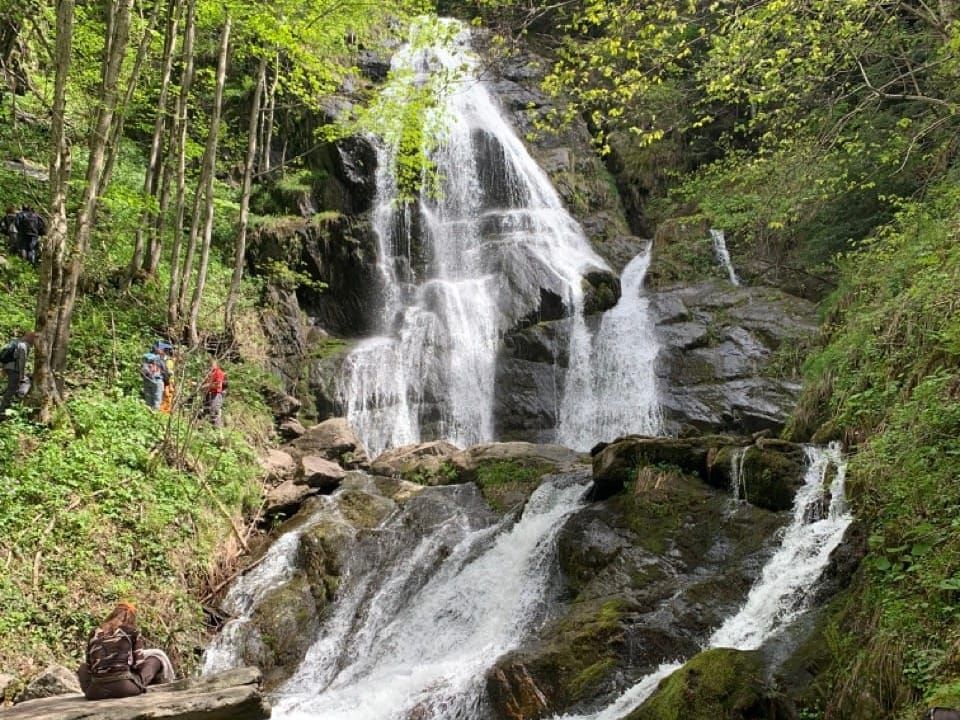
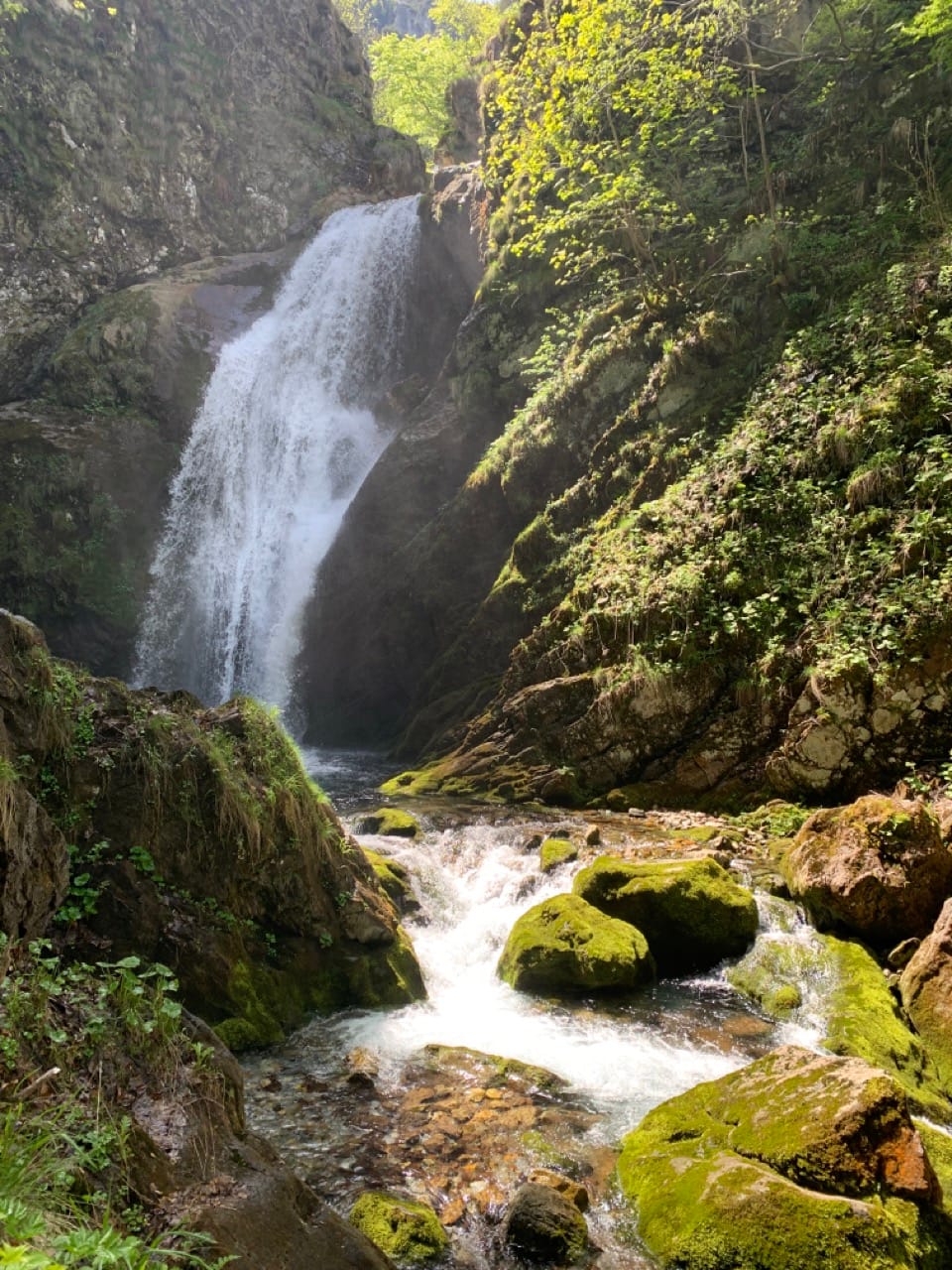
Of the waterfalls, the multi-tiered Cascata del Saut (which was still partially frozen) was my favourite. Fed by snow melt, it features two drops down the cliffside, and you can get quite close to it via a wooden bridge or by sitting on one of the rocks. Some people even went out across the rocks above the second drop—though that’s not for the faint of heart!
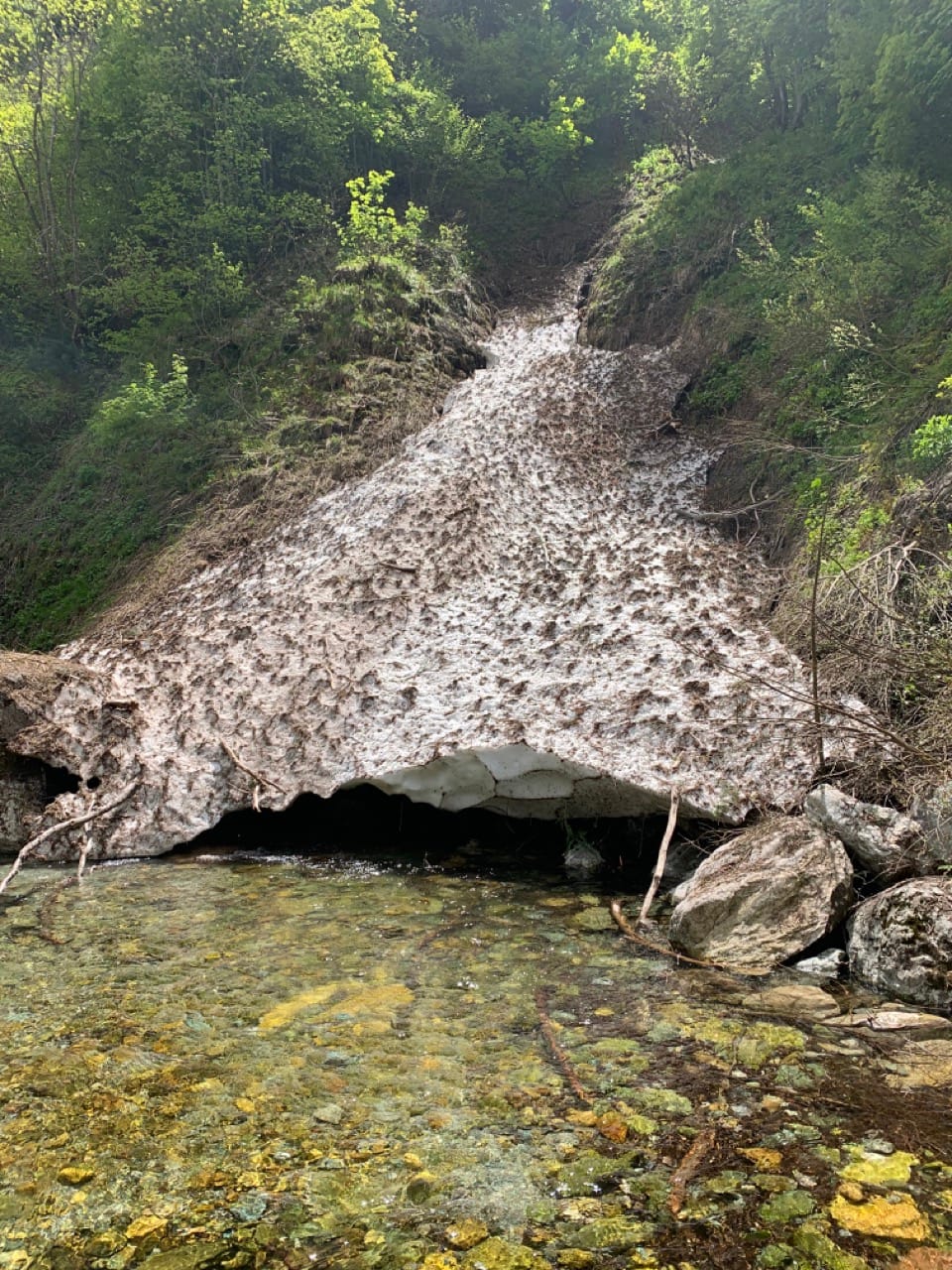
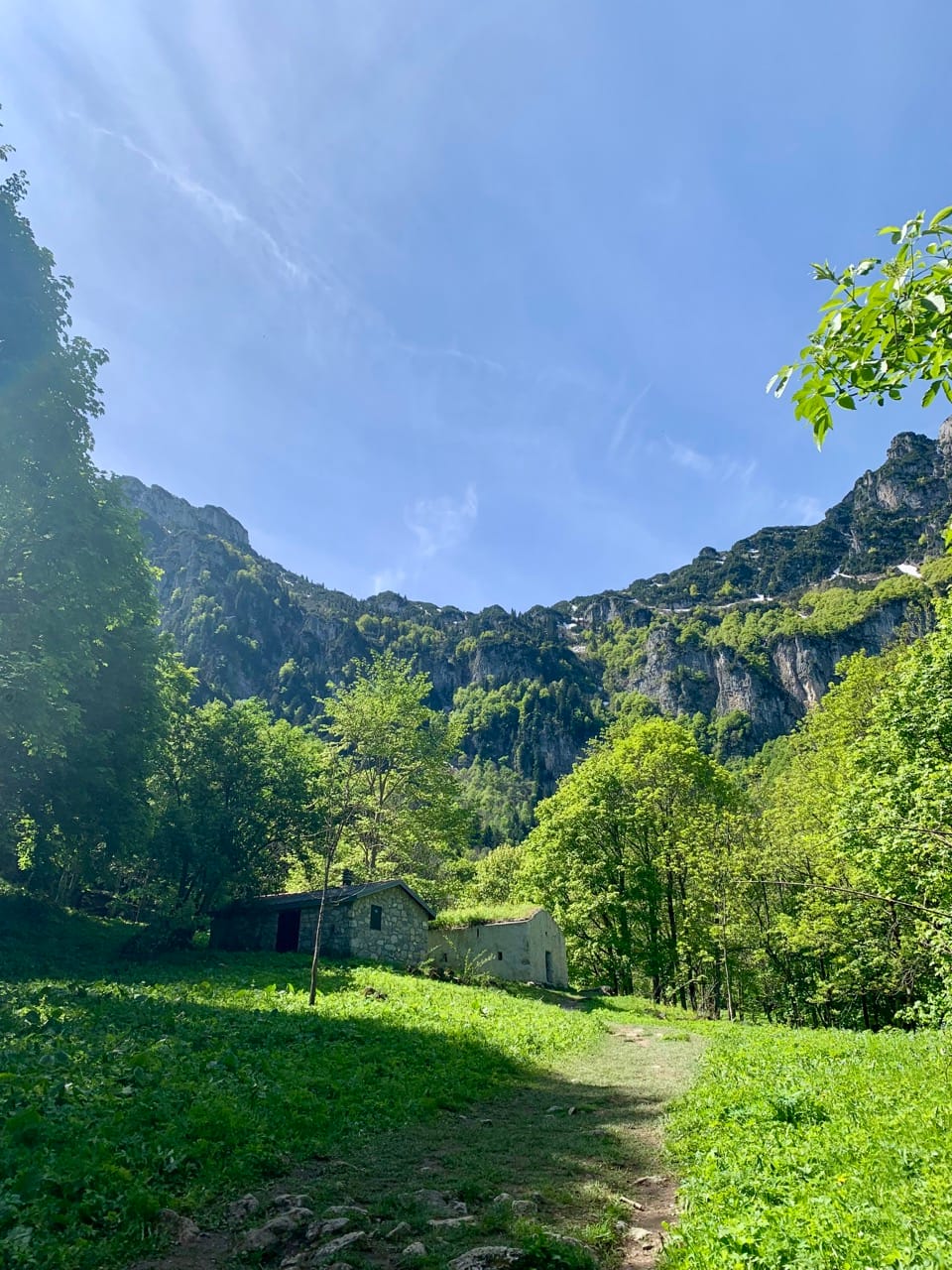
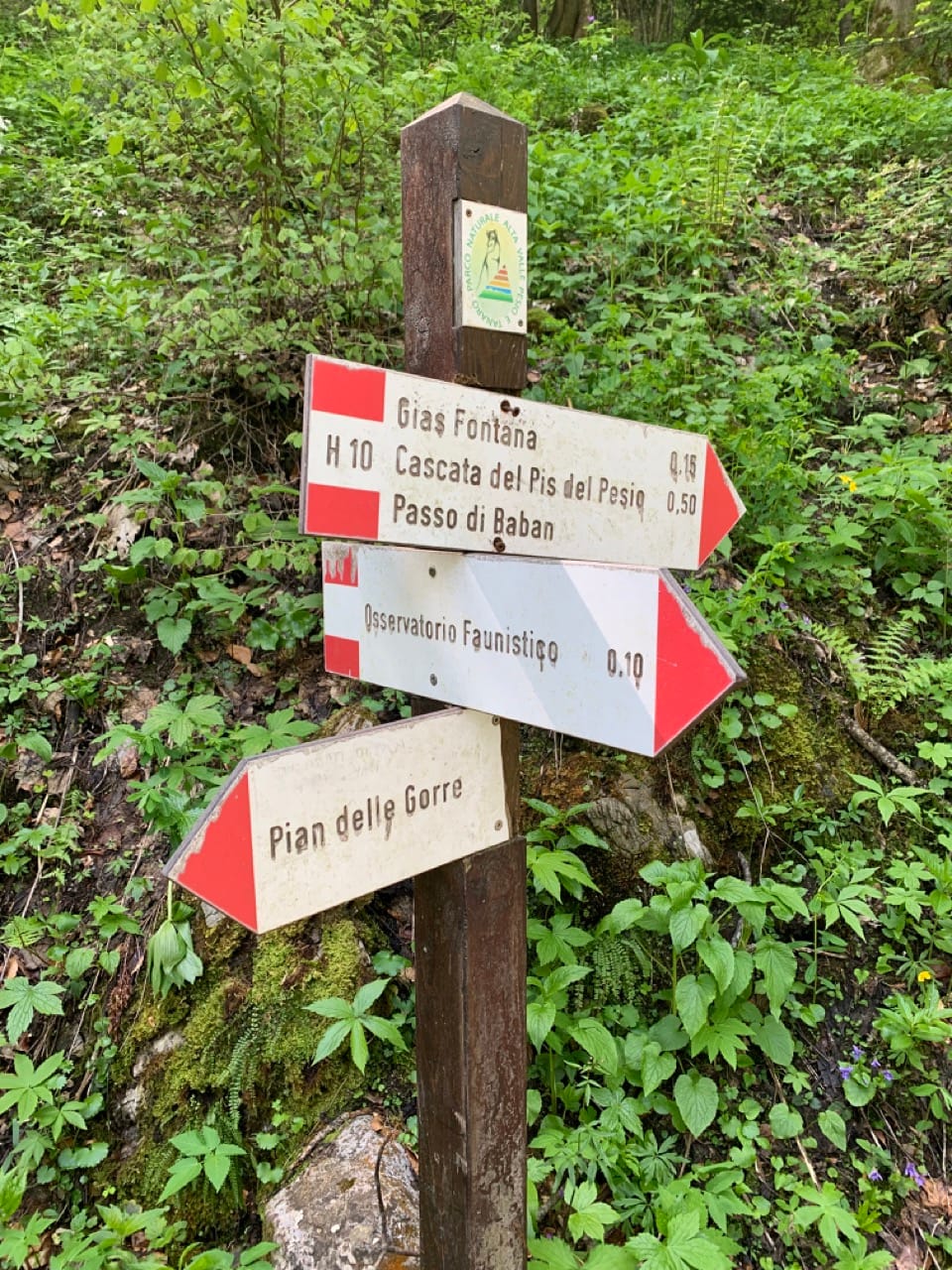
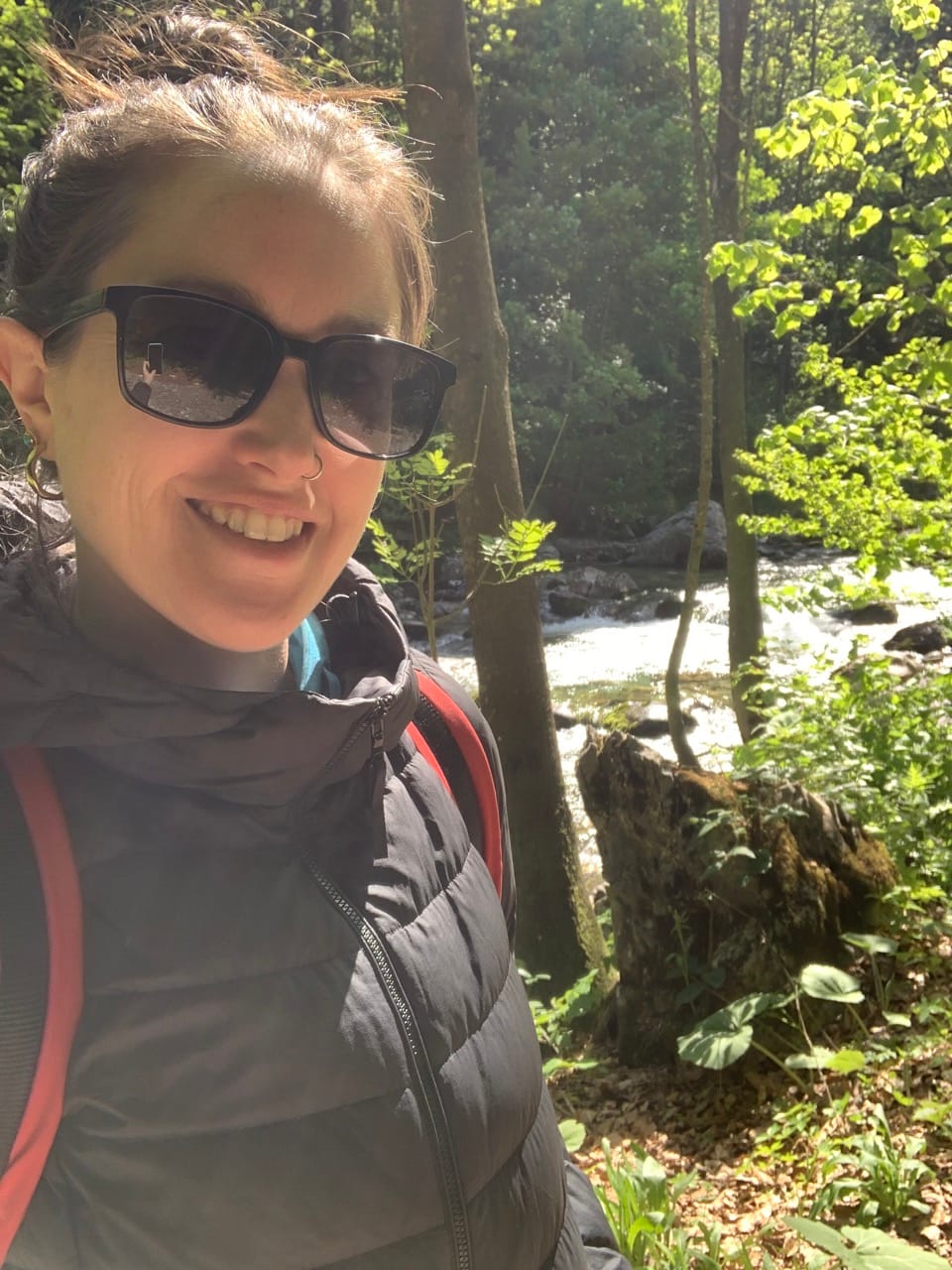
Clockwise from top left: The partially-frozen Cascata del Saut; the "Dolomites of Piedmont"; me enjoying the sound of rushing water; signposts on the Valle Pesio trails.
Hiking isn’t the only thing to do in Piedmont. See what else the region has to offer.
 Victoria Peel-Yates
Practical Tips for Visiting Valle Pesio
Getting there: Valle Pesio is around 30 minutes from Cuneo by car, and just over an hour from Alba. There's no reliable public transport to the valley, so a car is essential. Parking is available at Pian delle Gorre, Certosa del Pesio, and Villaggio Madonna d'Ardua, but it gets busy in the spring and summer, so arrive early.
What to bring: layers even in June—the valley stays cool under the tree cover, and the waterfall areas in particular can feel cold. Sturdy walking shoes rather than trainers.
When to set off: We set off after a breakfast stop in Chiusa di Pesio, which was worth the detour—but on a summer weekend, earlier is better for parking.
Chasing the Pis del Pesio
Missing the Pis del Pesio was disappointing, but the valley itself wasn’t. The clean, cool forest air and the sound of rushing water everywhere felt like stepping into a YouTube meditation video—and the Pis just gives me a reason to come back in June.
Heading to Piedmont’s wine country? Find out how to plan your perfect wine tasting trip.
 Victoria Peel-Yates